He was alone on the garden terrace, so I followed. When I blushed my way up to him and stood there, heart hammering, he just stared at me in silence. Under that gaze my whole body trembled, but I forced myself through the shame to introduce myself. "Mr. Carlisle, hello. My name is Claire Bennett."
He was very tall. He looked me up and down without a word, then pinched my jaw and lifted my face. I blinked back at him, shaking. I knew I was beautiful—at my most lovely when my eyes fluttered with feeling—and sure enough he narrowed his eyes. Then he waved to the bodyguards who were gathering.
It wasn’t until I’d spent a lot of time next to him that I realized he wasn’t the kind to drown himself in women. Plenty of women volunteered themselves to him, but over the years, I was the only one who’d come to him like that. In my third year by his side, his usually tight-lipped assistant sighed, "Miss Bennett, you’re lucky."
If this were a rom-com, I would’ve been his destined one—maybe not the lead, but a secondary female who resembles the heroine enough to make him soften. But I was actually just cannon fodder.
Much later I finally had the nerve to ask him, "Why me? Why was it you?"
He was in a good mood then, narrowing his eyes as he looked at me, and finally said, "You should be thankful your luck held out."
I was pretty lucky. Back then I was young—ignorant and fearless. If I could go back in time and ask myself now, at my current age, whether I’d dare to approach Nathan Carlisle like that—
My answer would be no.
Our first "date" was at The Coliseum.
Outside of TV, I’d never been to a place like that. Nathan took me to the private box at the highest level. Looking down, a dense, noisy crowd roared and raged. In the center of the arena were a man and a tiger—almost a one-sided slaughter. I nearly vomited, but I didn’t dare show it.
I turned my head to check his expression. He watched the fight with a nearly emotionless face, a slight twitch between his brows. Later, as I learned every tiny tell of his face, I realized that tug meant he was excited.
Killing excites people. That day, whether by intent or bad luck, the tiger leapt out and barreled into the crowd that had been roaring a second earlier. Everyone panicked and scattered. The tiger was finally stunned just two meters from us.
Warm blood splashed on Nathan’s hand. He narrowed his eyes.
When the Coliseum owner came over to apologize in person, Nathan frowned at the speck of blood on his hand. At that moment I believe all the wisdom in my life condensed into one reflex: I obediently leaned in and, like a well-trained pet, licked the blood clean from his hand.
He raised a hand, let it trail through my hair to the nape of my neck, and pinched that soft bit like he was petting a cat.
So when he said I was lucky, I secretly wondered: if that hadn’t happened, would he have thrown me into the arena to fight the tiger or lion?
He was someone you couldn’t easily read.
Sometimes he’d crash at my place. In that groggy morning haze when he woke, I’d often find him out on the terrace smoking.
Dawn sat in a muddled line between dark and light. He wore silvery-gray silk pajamas, sat sideways on the balcony smoking, the ember at his fingertips a tiny, wavering red. He didn’t smoke much—more often he’d just hold the cigarette and stare down at it. His dark hair fell in a messy edge over his brow; his profile was sharp and handsome, lashes lowered in what looked like sorrow.
He was a golden child, the head of a business empire beyond imagining—money, power; anything he wanted was within reach.
I didn’t know who or what could make that face, what could trouble him so.
He’d always had iron self-control. There was a time he smoked and drank obsessively and finally wore himself down to the hospital.
His family sat with him then. I pretended to be a passerby when I went by his room. He lay in the bed with a young couple at his side, showing him something on their phone. He held a peeled apple in his hand, glanced at the screen, and suddenly a small, real smile lit his face.
He hardly ever smiled. The few times I’d seen it were rare.
In fact, he was very serious. When his heavy gaze fell on you, you felt it to your bones—you wouldn’t dare meet his eyes.
So at that moment I was burning with curiosity. What was it that made him smile like that? What could make him happy?
I was the woman who stayed by Nathan Carlisle the longest. I think it boiled down to two reasons. First, I was truly very beautiful. In an entertainment world full of pretty faces, I consistently ranked among the top for looks. Second, I was obedient and careful. Women around him—especially his women—were spoiled by flattery and couldn’t help becoming arrogant. When Nathan indulged you, he’d hum and tolerate you; when he lost patience, you might never see him again.
I never fraternized with his staff. If someone tried to use me to get to him, I smiled and nodded and declined. Once a person brought a half-forearm-sized jade boulder into the lobby, perfectly translucent and gleaming, set it in the center like some offering. The man at the head of the group smiled politely and said, "Miss Bennett, no trouble—just help us get a meeting with Mr. Carlisle."
Of course I was tempted. Inside I felt torn—yet my face stayed neutral. I played it like an untouchable goddess; my eyes didn’t even glance at the jade. When the man left he praised me, "As expected from someone close to Mr. Carlisle—seen everything, been through it all. I almost embarrassed myself bringing such trinkets."
If that jade had a soul, being called a "trinket" might’ve made it spit blood. Inside I was bleeding too.
The man eventually found another route to meet Nathan. That night, the jade arrived at the Riverside Tower apartment Nathan gave me. He looked at me and smiled, "For something like that, it’s impressive you weren’t tempted."
Then he laughed, "With your nerve, I still don’t know how you dared present yourself to me in the first place."
Sometimes when we went to events together and the people below fawned over me, he’d half-smirk and tease, "Don’t spook her—my little girlfriend here is more timid than a mouse…"
He called me his "little girlfriend." Among all his companions, I was probably the only one given that title. In my fifth year with him, underground gamblers even set up a longshot—would I someday rise up and become his official woman? The odds were 350 to 1. The bet lasted two years. In my seventh year I placed a wager that I wouldn’t—because the idea of making a little extra spending money after a breakup made me oddly glad.
No one knew better than I did why I stayed so long: because I didn’t love him.
Well, he thought I didn’t love him.
Not loving Nathan Carlisle is a thousand times harder than falling for him. If you were me, you’d know how tempting his charisma could be—hard to remain immune.
I wasn’t immune. In my second year beside him I let myself daydream. That year I was on a reality survival show—one episode was a desert challenge. The stupid crew dropped four of us in the endless wasteland with minimal supplies for forty-eight hours. They’d skimped on safety, and a sandstorm cut us off from the team. I survived a day and a night of hell and, when I expected to die alone in that empty desert, Nathan sent a helicopter and found me.
He didn’t come personally, but that didn’t stop him from becoming godlike in my eyes. It’s astonishingly easy to fall for someone—one moment, one rescue, and all the defenses you’d built crumble.
When everyone said, "Mr. Carlisle seems serious about you," or "He never treats anyone else like that," or "He must be obsessed with you—no wonder; she’s so beautiful,"—it makes you dare to hope: could there be a sliver of real feeling?
Luckily, during the tide of my longing, there were other women around him.
Maybe because Nathan had the capital to be a philanderer, people assumed he was surrounded by many women. But he wasn’t particularly passionate about romance—too much hassle. He kept no more than two steady women, and very few could both read him and stay modestly obedient without getting cocky. Over the years, only I fit that bill.
One of those women was a rising star who debuted at her peak—a campus drama made her a nationwide darling with an image of wholesome innocence. She truly was pure. Nathan was generous to people around him—maybe generous enough to give her the wrong idea. So in the first month she walked up to me like a rightful girlfriend and warned, "Listen, Nathan is with me now. You better be smart about this."
I was stunned. I thought maybe Nathan had been won over by her purity. The tiny spark of something budding in me immediately withered. Three days later he called me to accompany him to an event. When we stepped out the smug girl was stopped by the bodyguards at the door, hysterical and losing all grace, crying, "Why? Nathan, why did you suddenly reject me? What did I do wrong?"
Nathan frowned. After that I never saw that actress again. She never filmed another scene—just faded away. For a long while I dreamed every night of that actress, tears streaming down her face as she tried to block Nathan. It was ugly, undignified, and yet in the dream her hoarse, wailing face would blur…and become my own.
Nathan looked down at me, eyes cool and distant, and said, "Pull it down."
Each time that gaze jolted me awake. I would tell myself over and over: whatever you do, don’t become that actress. Crying like that—it’s hideous. It ruins your image.
Gradually, the only woman who consistently stayed by his side was me. Everyone said Claire had great tactics, that Nathan was finally tamed by her. I just smiled and let it pass—because the women who drifted near him were always restless. He found them troublesome. If I’d ever openly told him, "Mr. Carlisle, I like you," I believed that would be the last sentence I’d ever say to him.
The only reason I could stay by his side so long was because I was dutiful.
From twenty-two to twenty-nine—those prime years of a woman’s life—were spent here, with him.
Before Diana appeared, everyone assumed I was playing the heroine. When she showed up, they suddenly understood: every cannon-fodder character snaps back into place the moment the heroine arrives—like Cinderella’s glass slipper after midnight, there’s nowhere to hide.
The first hint came on the business pages: a front-page photo of him and a woman standing shoulder to shoulder under an umbrella. The article dug into her background—family wealth, elite connections—and speculated it was a business marriage. Rumors of marriage alliances weren’t new to him, but they’d always fizzled out before.
I’d daydreamed more than once about his future legitimate wife striding up to me, tossing me an unlimited credit card, and brushing me off. It never happened, so I didn’t care much.
Their next appearance was in entertainment news: he was holding her hand, tilting his head to look at her. The shot was a long-range paparazzi blur—faces unclear—but I felt cold. When I set the paper down, my brain went blank and my body trembled. Something inside me whispered: this is different.
For reasons I couldn’t explain, I remembered an old, unrelated thing: when I was first gaining traction in the industry, everyone was curious about my backer. Paparazzi camped outside my place constantly. No one dared to leak Nathan’s private life, but there was that one exception—a paparazzo captured a photo where Nathan’s face wasn’t shown, only a hand reaching out from a car. My hand hovered over it; another hand lifted my skirt as I bent toward the car.
That picture trended. People examined the cut of the suit at his wrist and guessed the million-dollar watch. Comments nominated dozens of people—some I knew, some I didn’t. After that hit trending, the first thing I did was go see Nathan. Standing outside his door I was a mess—pale, frantic. I said, "It wasn’t me." There had been cases of stars bribing paparazzi to snap Nathan’s picture to blackmail him; those plots tended to end badly. I insisted, "It wasn’t me."
He looked at me, hummed nonchalantly, and said, "I know."
Only then did my heart ease.
Entertainment moves on; that story faded. After I got bigger, when people tried to dig it up again, my fans buried it under counterattacks.
Now—this brazen photo of Nathan and a woman plastered on the center of the entertainment pages—it left only one possibility in my mind: he allowed it.
He allowed that woman to be openly seen beside him.
I went online and looked up Diana’s profile. She was the only child of a major Arbor City corporation, brilliant from a young age, spoke six languages, graduated from a finance program in the U.S., and loved extreme sports.
Following the trail, I found her personal account. She posted photos with friends, at meetings, rock climbing. She wasn’t conventionally stunning, but she was vibrant and self-possessed. There was a picture of her hanging off a cliff, hair windblown, no makeup, grinning like a sunflower under summer sun—radiant and full of life.
I had never shown Nathan my bare face in public. Maybe that was the etiquette of a woman kept by a man. Still, I envied Diana’s ease in front of him—granted, she had the right to be at ease.
I met Diana when I wasn’t prepared at all. It was at an industry gala; I was Nathan’s date, made up and immaculate down to every hair. I stood by his side and didn’t need to say anything—just smile.
Diana arrived in a simple, elegant outfit. When she passed us she accepted a drink from a waiter, glanced me up and down, then winked at Nathan with that knowing, privileged smile. "Not bad—good eye," she said lightly.
I fought the urge to furrow my brow. I looked up at Nathan; his gaze lingered on Diana, deep and probing.
Probing what?
Have you seen romance dramas? In those scenes, a CEO brings the rival character to a party and the heroine walks in. When the heroine forces a smile and says you two look good together, and the CEO stares at her darkly—what is he probing? He’s wondering if she’s jealous.
But Diana was genuinely carefree. Nathan?
He was studying how Diana reacted when she caught him with another woman.
After that I couldn’t help but probe him about their relationship—half-joking, half-serious—asking if I should gracefully bow out. He idly flicked ash from his cigarette and said flatly, "We’re just friends."
"Friends" is an ambiguous, earnest word. It can cover anything you can’t define yet. I murmured an "oh," and went back to peeling an orange.
Nathan liked oranges, but he detested them sliced with a knife—he insisted they be peeled by hand. At first I was frustrated; as a girl I liked keeping my nails pretty. Peeling oranges ruined long nails, made them yellow. After I started seeing him I stopped growing my nails long. I mourned them in my youthful vanity.
Sometimes I would think—if he ever ended up with Diana, I’d probably never have to peel another orange for him.
It made me a little wistful, so I peeled him an extra one.
When I told my friend Maya about it, she scoffed. She thought I was overthinking it, being anxious for no reason. She had a line she loved: "Do business marriages ever have real feelings? They’re capitalist alliances dressed as marriage—frail paper that turns to ash. One gust and they’re gone."
I smiled and said nothing. I’ve always trusted a woman’s sixth sense—especially a beautiful woman’s—it’s often sharper than radar.
I felt certain the night of that storm.
It was around two in the morning. I was half-asleep when Nathan’s phone rang. At first I was groggy, but when I opened my eyes he was already sitting up, answering in a calm voice, "Don’t panic, tell me slowly."
"Where are you now?"
"Are there any landmark buildings you can see?"
When they were renovating this house, Nathan insisted on privacy and soundproofing. The place was almost impossibly quiet. Yet through the thick silence I heard wind and rain screaming through the phone, a panicked female voice—like a heavy mallet banging on my skull until my head buzzed.
Nathan’s voice was gentle. "Diana, don’t be afraid. Wait for me."
The bed shifted. The lock clicked. Then everything fell silent.
The house’s soundproofing was crazy good—when the bedroom door closed I couldn’t even hear his footsteps. But with my eyes closed I imagined him padding down the hall, through the living room, grabbing his keys by the entryway, switching shoes, and heading for the garage.
I slipped the covers back and opened the curtains. Rain slapped the window in silent sheets; rivulets ran down the glass then were washed away by the next. I counted slowly—one, two, three—then saw a pair of headlights emerge from the garage. Pressing my palm to the window as if to touch the light, a tear slid from my eye without me noticing.
Later, a gossipy friend of Nathan’s let something slip: that night, in the storm, Diana’s car stalled on Maple Avenue.
Maple Avenue is tricky—many side streets, a maze in the heart of the city. Diana didn’t know exactly where she was. Flustered, she called Nathan. Half an hour later he was inexplicably there with her.
Maple Avenue. From our home it takes at least forty minutes by car. Without knowing where she was, he’d found her in thirty. I couldn’t help thinking—what a damned friendship.
His friend Ethan, half-reclined on the sofa, squinted lazily and offered his little jab: "Claire, honestly, among the people around Nate, you’re my favorite. Diana’s back—start making plans for yourself."
"You can’t beat Diana. She doesn’t have to do anything—just stand there and you already lose."
I raised the beer in front of me, smiled faintly, and drained it in one go—a small toast to him.
I heard Nathan Carlisle and Diana Hart first met in the U.S. Nathan had been invited back to speak at his alma mater. How they met and fell for each other, I don’t know. What I do know is Diana met Nathan before I did — and in every way, she was more proper, more respectable than me.
Ethan told me I couldn’t compete with Diana. He said she didn’t have to do anything; just standing there, she’d win. If I said I’d never wanted to compete with anyone, he wouldn’t have believed me.
To those people, no matter how politely they praised me on the surface, they couldn’t hide their deep contempt. People must pay for what they do. They believed my motives for getting close to Nathan were impure — and that wasn’t something I was allowed to deny.
When I first met Nathan, he wasn’t married, he had no girlfriend. Morally, I had done nothing wrong. I only wanted to try — to live better, a little more dignified so I wouldn’t be trampled on by everyone.
I didn’t think I had done anything wrong.
They thought my calm, unbothered act around Nathan was fabricated — a persona I had carefully crafted. They said that once Nathan left me, I’d show my "fox spirit" tail for all to see: clingy, desperate, a mess. Their so-called advice was more like beating me down.
A person’s friends determine how you rank in that person’s life. From the moment Ethan said those words to me, I felt it: seven years of anxiety were finally reaching their finale.
Long ago, I had pictured our last moment a thousand times. In so many dramas, such a scene comes with a torrential downpour; stubbornly, I would lift my chin to the sky at a 45-degree angle, refusing to let tears fall, looking heartbroken as Nathan turned away without a backward glance. But the reality was an ordinary bright sunny day. Nathan happened to come for lunch. Mrs. Lin made a simple four-dish-and-soup meal I remember clearly: pork rib winter melon soup, braised pork, a plate of fish, a salad, and egg-fried shrimp. The Carlisle family had a farm that grew vegetables, raised fish and shrimp, and kept cows, sheep, chickens, ducks, and geese — all organic.
Those ingredients were only for the family’s meals, not sold to outsiders. So even though the menu was simple, the flavors were fresh and real.
Halfway through the meal, I started peeling an orange for Nathan. The faint citrus scent drifted into the air. Nathan suddenly said, "The Westside villa — I’ve already had someone transfer it to your name."
"And that sports car you loved last time? I had someone order it overseas. It’ll be delivered to you in a few days."
He lifted his glass, sipped water, then calmly wiped his mouth and continued, "Everything else has been put into your account. You can check your balance."
I kept my head down, meticulously peeling the orange as if it were the most important task in the world. After a long time, he asked, "Is there anything else you need?"
I handed him the perfectly peeled orange and said, "Eat this."
He looked at me for a long time, then took it and ate it piece by piece.
I smiled a little. I knew my smile was my best feature, so I smiled very lightly at him. "I have a scene this afternoon, so I won’t keep you, Mr. Carlisle."
He nodded, expression unreadable. His gaze lingered on my face for a moment, appraising, then moved on. He stood, picked up his jacket from the chair back, and inclined his head. "I’m leaving."
I walked him to the door. As I stood watching his car become a speck and fade from view, he suddenly turned back, brow knit. "If you ever need anything, you can go to Ethan."
I nodded and smiled.
I knew that was the last of his indulgence. For someone as decisive and unsentimental as he was, saying that was a huge concession — after all, he hated lingering contact after a split.
I stayed by the doorway until his car disappeared.
That night, Mrs. Lin came in around ten, making the late-night snack Nathan liked. I hadn’t turned on the lights; she startled when she saw me sitting stiffly at the living room table. "Claire, are you all right?"
I flexed muscles that had gone numb and realized I’d been frozen there for hours. I forced a small smile. Before I could answer, she asked in her warm Shanghai-accented voice, "What’s wrong with you?"
Mrs. Lin was a Shanghai auntie; she slipped into local dialect when she worried. I rubbed my temples and said tiredly, "I’m fine, Auntie."
After a beat I added, "You don’t need to come anymore."
She was shocked and switched back to Mandarin. "Then when Mr. Carlisle comes, who will cook his food? He likes dishes made your way."
There was no one else around, so I let my frown deepen and murmured, "He won’t be coming anymore."
5
Maya and I spent a year traveling with no real plan, wandering south and north as we pleased. The wildest thing we did was soak in a natural hot spring below snowy Albanian peaks at night, then impulsively buy tickets the next day to fly to Iceland to chase the aurora. We had plenty of time — and money.
When Nathan’s marriage news popped up, Maya and I were wandering the medina in Marrakech. The open-air market was teeming with people, stalls overflowing with vivid silk and baskets of spices. It was noisy and messy but had an entrancing old-world charm. I was waiting on the curb as Maya examined silk at a stall when a notification from three days earlier from my agent lit my phone: four plain words — "Are you okay?"
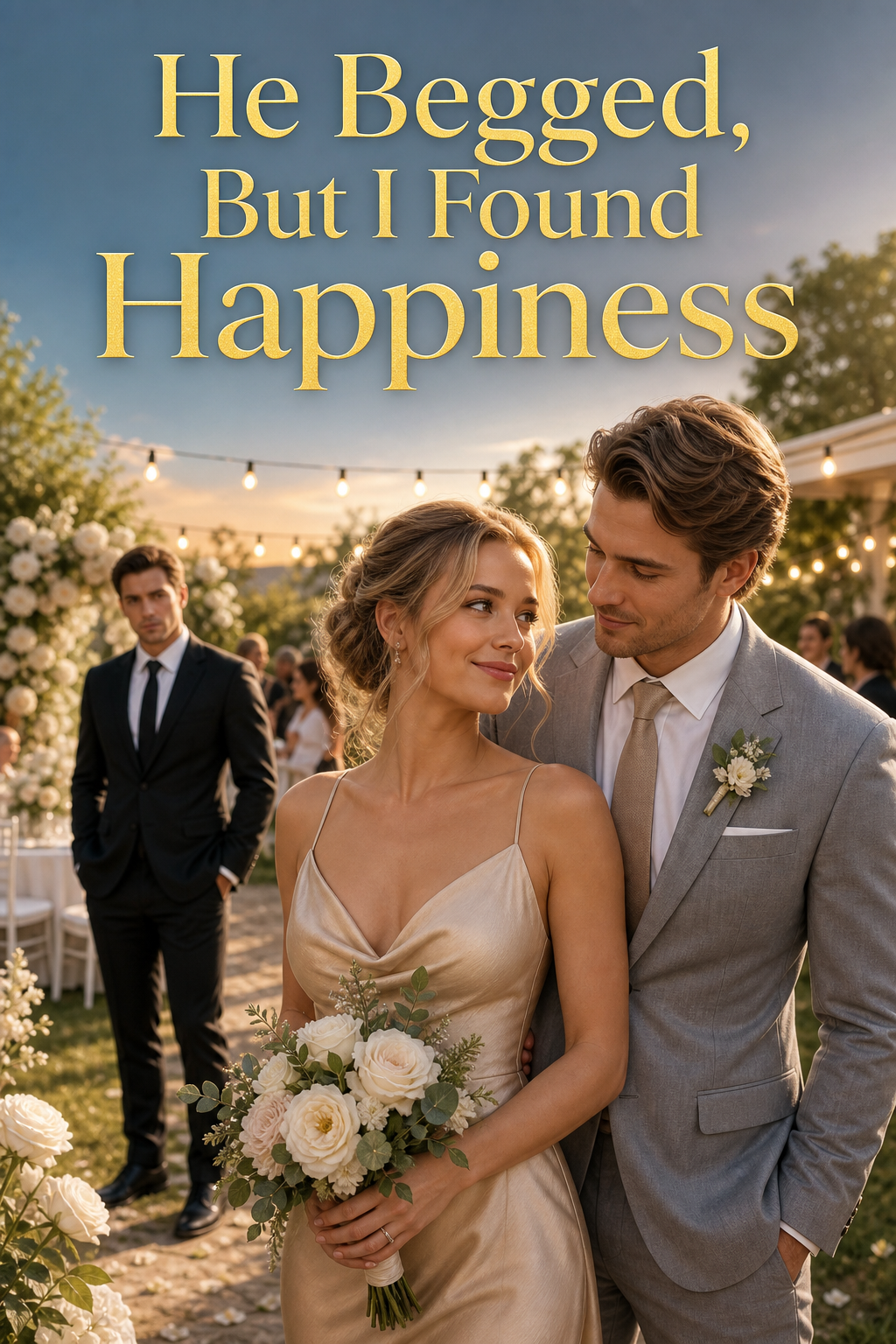
He Begged, But I Found Happiness
After Nathan and I split, I changed every contact and drew a deep chasm between his circle and me. But the push news still showed a headline: Nathan Carlisle and Diana Hart's wedding. The lead photo was a wedding portrait — Nathan looking at the bride in her white gown with tenderness and warmth in his eyes.
My mind went blank. Maya nudged me and I realized my hand was shaking on my phone. My face must've gone pale because Maya's expression went frantic. "Claire, what's wrong? Don't scare me!"
Maya stayed, and we spent three full days in that hotel. I didn't know what was wrong with me. My head was clear and logical, telling me I had no right to be this upset — after seven years with Nathan, who did I think I was? But a deep fatigue swelled from my core and spread to every limb, making even my fingers heavy.
I was endlessly grateful for Maya's patience.
Back home I settled into regular work. Even without Nathan's connections my schedule filled up. I wasn't especially talented at acting or singing, but I was pretty — and in this era, pretty buys you tolerance. I had enough self-awareness to keep quiet, low-key, and polite, and big-name directors and brands still wanted me.
Two years after Nathan's wedding we ran into each other again at a pitch event for one of the country's top variety shows. I was a regular guest; Nathan was there as an investor. The industry is small. Three years had passed without a bump-in — maybe because he'd quietly arranged it.
Maybe he thought three years made it safe to cross paths again.
I politely toasted with the creative team and approached him with the proper distance, glass held slightly lower than his, addressing him formally: "Mr. Carlisle."
Back when we were intimate, I had once whispered "Nathan" in his ear. I had turned white afterward, and he had chuckled low and said, "What are you afraid of?" Memories like that felt like a dream now, something from a life I had burned through.
After a few rounds of drinks, a producer friend who always looked out for me asked me to deliver an outfit to Suite 302 upstairs. I walked on thick carpet in heels that somehow made no sound and pushed open the door. A familiar silhouette stood by the window.
Nathan leaned against the glass, smoking. The smoke curled from his mouth. His profile was still impossibly handsome. I knocked before stepping in. He turned, crushed the cigarette in the ashtray, and rasped, "Sorry."
We stood silent until he asked, "You changed your number? Ethan and the others tried to reach you but couldn't."
Then he added, "I heard you sold those places. Where are you living now?"
I murmured that I cleaned everything up because I was afraid old stories would be dredged up after his marriage and cause him trouble, so I handled it all for both our sakes.
He looked like he'd been drinking; his brow furrowed deeply. Watching that crease, I couldn't help thinking — he married the person he loved, so why did he look so unhappy?
His gaze settled on me. When our eyes met, it felt like being paused mid-breath. He shifted closer slowly. I wanted to run, but my legs felt rooted. When his warm breath brushed my face I closed my eyes in a hopeless surrender and gripped his shirt as if in panic.
He was married; this was wrong. My reason screamed, but I couldn't resist him.
I never could.
All my defenses from the past three years collapsed in an instant at a single look. If it was him, I was ruined.
I tilted my face up and felt his lips skim my mouth, his mouth by my neck, breath warm. "I'm sorry," he murmured.
Then he pushed away, looking regretful. He rarely lost control like that. He rubbed his temple and said, "Sorry, I'm drunk."
I forced a smile, a hollow little clownish curl of lips. "It's okay."
Six days later I was on the gossip pages, and only then did I finally understand what Nathan Carlisle meant by "I'm sorry."
The third floor of the venue had no guests—just press friends—and a photo of Nathan and me surfaced. It was high-definition: my head tipped back, eyes closed; he leaned over me, his forehead nearly touching my neck. Strands of hair fell across his face, hiding his brows and eyes. If you weren't extremely familiar with him, you might not have recognized Nathan at all.
But a photo that intimate wouldn't have been released without Nathan's go-ahead. Even if the media had taken it, no one would dare run it without permission.
My manager's phone blew up. Everyone was hinting and prodding—who was it? Was he my boyfriend? An onslaught of angry messages streamed in online. Maya Brooks called and unloaded a storm of curses at Nathan. But I wasn't sad or panicked. I was genuinely, honestly confused. Why?
I couldn't grasp the point of Nathan doing this.
A few days later I understood—because I ran into Diana Hart at an event.
She saw me and genuinely smiled, teasing me under her breath. "I saw that photo. Nice shot. Back when Ethan and I bet, I said you were his soulmate. Ethan laughed at me—said after all these years, you two suit each other."
At that moment everything clicked. And when it did, my chest ached for Nathan.
See, Nathan had been fixated on marrying her—but she didn't love him.
She didn't love him at all.
I remembered the deep furrow between his brows that day. He had deliberately leaked that photo to use me as bait, to test Diana's reaction.
Earlier I had been puzzled why such a top variety show would make me a regular. Now it seemed it was compensation from Nathan. I pictured him feeling defeated then. Standing in front of me, smiling and radiant, Diana's reaction was absolute confirmation: she didn't love him.
Diana turned to leave. For some reason I called after her. She turned, puzzled. I watched her and spoke slowly, word by word: "Ms. Hart, Nathan and I broke it off a year before he married you. We've never seen or contacted each other since. That photo was just a misunderstanding."
I paused, then added, "You should know—since marrying you, Nathan has never betrayed you."
She stared, surprised, as if she didn't understand what I meant.
Only I knew why I said that. I understood Nathan could use me to probe Diana, but I couldn't bear letting the woman he loved misinterpret him. If there was even the slightest chance—however remote—between Nathan and Diana in the future, I refused to be the old thorn between them.
If you truly love someone, you'll understand how I felt. If there was any chance Nathan could hold happiness, I wanted to help him get it.
I really, truly wanted him to be happy.
Seven months later I announced a relationship: with a hugely popular actor who'd been on the variety show with me.
He knew everything about me and was gentle and understanding. He gave me advice on life and work like an older mentor. With him there were no wild ups and downs, just calm and comfort.
A year later we married. On the wedding day, in the makeup room, my manager handed me a gift, fumbling.
Inside was a simple crystal globe. Encased within was the frozen explosion of fireworks.
It must have been from long ago—Nathan and I on the World Trade rooftop, watching fireworks over the waterfront. I had said something like, "Glass is fragile and clouds disperse; the beautiful things in this world are fleeting."
I never thought he'd remember. He'd preserved those fireworks in this globe and written a new, handwritten wedding wish: "May you be as brilliant and lasting as these fireworks, and enjoy a lifetime of happiness."
My manager, Ava, was beside herself. "I know it's moving, but don't make a scene. Don't do anything stupid."
At that moment the makeup-room door opened. My groom waited there. I smiled, closed the box, and walked to him.
I walked toward my future.
Just like Nathan had said: I should be brilliant and lasting, and happy.
Epilogue—Nathan, part 1
I locked myself in my study to focus on making the crystal globe when Ethan came by.
He stared at the table piled with materials, the trash can, and half-finished pieces strewn on the floor, utterly baffled. "Nate, what are you doing?"
Nate, what are you doing?
When the news of her wedding leaked, I flew back from Los Angeles overnight. When my head cleared, I'd parked under her building. Sitting in the car and staring at the lights in her windows, I asked myself the same question: Nathan Carlisle, what are you doing?
To be honest, I always disliked women who clung. After Claire and I split, I never expected she'd clean things up so thoroughly. She changed every contact method, sold the properties I bought for her—clean sweep.
At first I didn't notice. Then one day a business partner gave me a box of pearls, claiming they were comparable to the 1520 discovery from Oviedo. I don't usually care about trinkets, but for some reason I opened the box. A perfect string of pearls nestled inside the velvet.
I thought of Claire. She never wore flashy gold or flashy jewelry, but she adored pearls. A round pearl necklace on her long neck—her skin almost seemed to glow.
Sometimes I'd stay over at her place. In the mornings I'd watch, amused, as she sat at her vanity applying makeup—her black brows, the upturned corners of her eyes, lips stained a rosy red. She'd open a jewelry box with slender, pale fingers, touch each compartment, testing each pair of pearl earrings at her ear while tilting toward me and asking softly, "Does this one look nice?"
The pearls would sway beneath her earlobe, and on that face? They only made her more exquisite.
I didn't have many women at my side, but I never went without one. Claire was one of the most beautiful among them. I still remember our first meeting—she slipped past bodyguards to approach me, cheeks flushed, shyly introducing herself, "Mr. Carlisle, I'm Claire Bennett."
Seeing her face washed whatever displeasure I had away.
She was young then—maybe barely in her early twenties—fresh and trembling. I remember the blush, the way it spread from her ears down her neck. She reminded me of the one-month-old leopard kitten I used to have—tiny, puffed up, pretending to be fierce. I waved the bodyguards off, lifted her chin, and she obediently closed her eyes under my fingertips, lashes fluttering like a butterfly.
Seeing that pearl box, I thought of her again. So I kept the pearls and handed them to Ethan. "Give these to Claire," I said.
Then, after a beat: "Don't tell her they're from me."
I wanted her to have them because they suited her—not as some lingering, ambiguous sign that I'd never let go.
I'm not the type to go back.
I didn't expect Ethan to call me smirking afterward. He looked at me with that amused, slightly mean expression and said, "It's a disconnected number."
He teased, "You're out of the loop, Nate. Your little girlfriend changed her phone and didn't tell you?"
Not just the phone—her private WeChat was gone, too.
I don't remember exactly how I felt then—maybe a mix of bitter laughter. Ethan tossed the velvet box back at me. "Take it yourself. I won't run around delivering a box of pearls."
I weighed the red velvet box in my hands, and for reasons I couldn't explain, I drove to her building.
I knew she wasn't taking calls. The properties I'd bought for her—villas in the suburbs, city flats—I'd bought them all over the place. That day I drove all over town and discovered she'd sold every one of them.
Parked by the curb, I let out a laugh that was more anger than amusement. I flung the box of pearls from the passenger seat out the window and drove off without looking back.
She'd reached that level of finality—any fool could see what she meant.
Later, when Ethan brought her up, he shrugged, "Claire's quiet and ruthless. We thought she stayed around because she was obedient. Turns out she was obedient because she didn't love you, Nate."
He loved to watch and ridicule. I ignored him.
The last time I saw her was at a variety show's investor meeting. I was the biggest investor; she and the creative team came over to toast. Later, in a quiet third-floor room, I asked her casually, "You changed your phone? Ethan and the others say they can't reach you."
I paused, "And I heard you sold those properties. Where are you living now?"
She said softly, "I just didn't want old matters to resurface after your marriage and cause you trouble, so I took care of everything."
She deflected and didn't say where she lived.
I had lots to focus on. My attention moved on, and I let the woman I'd once tossed aside go with it.
Time marched on until the day I found out she was getting married.
Two
Claire never told me where she lived, but nothing's beyond my reach.
I lit a cigarette under her building. Smoke curled up, the faint scent hanging in the narrow space. I don't really smoke; I hate anything that causes addiction or loss of control. Mostly I light a cigarette and watch it burn. The smell calms me and helps me think.
When the cigarette burned down, I saw Claire come out, carrying grocery bags. A tall figure walked beside her. They were casually dressed—just back from the supermarket. Honestly, I didn't recognize this Claire.
She was wearing an oversized T‑shirt, jeans, plain white flats. A black mask covered most of her face, but when the man beside her spoke, her eyes showed a peaceful smile—so unfamiliar.
This was a side of her I’d never seen.
In front of me she never dressed like that. Always full makeup—even in a bathrobe she carried herself with elegance.
She weighed every sentence before saying it around me, afraid one slip might displease me. Ethan once said she was fake; every moment with me she could have walked a red carpet.
This wasn’t the scene for nostalgia. I made sure she didn’t see me and drove off.
Back home I sat alone in an empty room drinking, flicked on a TV that hadn’t been touched in years, and found the variety show where they’d declared themselves a couple. I only remembered halfway through the opening sponsor logo that I’d invested in that show.
The man with Claire was a well‑known actor. They had a huge shipper following; I didn’t need to comb frame by frame—someone had already cut together their solo moments.
I sat in the dark screening room and watched the episode that made them “official.”
There were a lot of sugary cuts—sure, the producers probably staged a lot—but one scene lodged in my throat like a bone.
Her team lost a game. The punishment was to jump from a five‑meter diving platform into the pool. Claire was afraid of heights and water; she froze on the board for a long time, not moving.
Everyone else on the show shouted and egged her on. Only that man walked down to the pool, stood beneath her, looked up, and said, “Claire, don’t be scared. I’ll catch you.”
The impact from five meters is strong; the cast joked and teased, but Claire looked down from the platform with utmost seriousness as she stared at him.
Their shippers must have loved it. The freeze frame the editor chose was overlaid with pink hearts, a rosy filter, and some saccharine love song when their eyes met.
An oddly timed memory from years ago popped into my head. She was filming a period drama down in Fujian, and on impulse I went to visit the set. There was a scene where she was wire‑harnessed, flying off a cliff to the riverbank below.
During a rehearsal the wires malfunctioned. She suddenly dropped and landed near the cliff base, rolled, and came to rest clinging to an outcropping about five or six meters below, shaking and crying.
Below the cliff the lake was bottomless. Rescue was difficult; she would have to jump down to the boat. The crew tried every trick, but she couldn’t bring herself to jump. In the end I piloted the rescue boat under her position. I looked up, reached out, and said, “I’ll catch you.”
She looked at me through blurry tears. I don’t know why she trusted me so completely—after more than an hour of coaxing by the crew she closed her eyes and leapt toward me.
The impact hit hard. I staggered back and fell into the boat, bracing against the shove, but I held her steady in my arms. I soothed the trembling girl in my lap, “Don’t be afraid. See? I caught you.”
Her lashes fluttered, she blinked wide, and in her dark eyes was the clear reflection of my smiling face.
I’m not a patient man, but strangely, I’d sometimes indulge the urge to comfort her.
When I was with Claire, aside from disliking trouble, I was, at root, a capable lover.
I don’t know what moment convinced Claire she wanted to marry that man, but from what I know of her, that pool scene must have been a huge turning point for them.
After I shut the TV off, some nameless fury rose up. I called the show’s producer and unloaded my anger. The executive producer on the other end kept apologizing in a small voice.
Still, that sourness in my chest wouldn’t fade. I slept poorly, if at all.
Not resting well made my mood terrible the next day.
When I drove to pick Diana up, she looked at me and smiled, “Come on, Nate. Don’t be so mad. You've gone most of your life with hardly any setbacks. Think of it as me bringing you back down to earth—smile it off.”
She thought my sour face came from the fact that today we were going to sign the divorce.
Whatever I felt inwardly, in front of a lady I was always gentlemanly. I rubbed my temple and said, “Sorry.”
She shrugged and looked at me with concern. “You okay?”
I couldn’t explain that nameless agitation and anger to someone else. I replied politely, “I’m fine.”
She was sensible enough not to press.
Diana and I married three years ago—or about three years. My memory had grown fuzzy.
She was the perfect person, a very good wife: great family background, clever, capable, gracious.
I’d first met her when I’d been invited to give a speech at the university from which she was graduating. She was then a grad student.
My talk went well. People in my position get that privilege—whatever I say onstage, the students treat it like gospel.
She was the only one who stood up and raised her hand. Tilting her head, she batted her big eyes at me and said with a smile, “Senior, I disagree with your point.”
“Senior.” Funny—after graduation that was the first time anyone had called me that.
I remembered her: a girl whose smile lit up everything.
Our families were connected socially; after she returned to the country, we saw more of each other. I found her lively and interesting—warm and sunny, the sort of smile that made crowds bright.
During a business dinner with her father, he’d laugh and say, “I don’t know what kind of man my daughter will marry. Only a father worries—no one’s good enough.”
Then he’d add, “But Mr. Carlisle, you’re someone I trust.”
I watched Diana from across the room. Bored, she was teasing the kid at the next table with a candy the hotel had given—shaking it in front of the child, making him stare with his fingers in his mouth.
I couldn’t help laughing.
I once truly and sincerely liked Diana. But I heard she had someone she loved and was tangled up in that love, so I let it go.
Later, I met Claire.
Claire stayed with me for seven years—seven years and three months. Sometimes I puzzled over how one woman could remain at my side so long.
Over the years she was the exception. Outside of her, no woman lasted more than six months with me.
In the end, it was only her. People even joked that I’d settled down. My friend Sebastian started a bet about whether Claire could win me over and become my lawful wife.
I shrugged him off. Then he called me one day, laughing like he’d found the funniest thing. “Nate—what’s your little girlfriend’s name again?”
“Claire,” he said. “She actually placed a bet.”
“She bet she’d never become Mrs. Carlisle?” he wondered.
No, I knew she wouldn’t.
Sebastian lost interest and sheepishly asked how I knew. Because I knew Claire. Before we split, I’d been certain.
She’d been the most sensible, the most fitting of all my women. I couldn’t understand how someone could match me so well. After the early adjusting period, every time I flicked an eyelid I felt she already knew what I wanted.
She wasn’t blindly obedient—she had little feminine coaxes and coquettish moments that I tolerated. When she was good, she was heartbreaking. When she was charming, I softened. When she pretended to be angry, it was always perfectly timed. I liked to pamper her.
I treated her like my girlfriend—sometimes I even said “my little girlfriend,” because she’d occasionally show a naive, silly side. Once she’d pluck up the courage and ask, “Would you go bankrupt?”
What kind of question is that? At my level, my earnings were more than money—I’d been told by the mayor that if I fell, the city’s GDP would be set back a decade.
When I asked why she asked that, she’d playfully purr, “Because I want to know—unless you go bankrupt, I’ll never get you.”
She said it with the corner of her mouth lifted in that lingering smile—was it sincere or a tease? I didn’t press.
Between a man and woman with no long‑term plan, questions like that aren’t worth digging into.
Year after year. Year after year. When I decided to marry Diana, Claire and I had already split.
Playtime is one thing, but when I marry, I give the legal spouse a basic right: respect.
The decision to marry was impulsive. It happened on a rainy night when I found Diana lost on Maple Avenue. She looked up at me, crying, and asked, “Will you marry me?”
When a woman asks you that with tears streaming, there are only two possibilities: she either loves the man desperately, or the man she loved has broken her so badly she’s ready to settle for anyone.
Diana was clearly the latter.
I never thought I’d be associated with the word “settle.” Diana was the only woman who ever moved me. I was arrogant then—convinced there was nothing I couldn’t have. She was the right match: status, family values, everything aligned.
I said yes.
Clearing things up before marriage was my courtesy to the woman I would wed.
I hesitated a long time before ending things with Claire. It was one of the rare times I wavered.
My first acquisition as a young man shot me to fame. I rarely made bad decisions—this was one of the few I wasn’t sure about.
Ethan disliked my hesitation and went to speak with Claire. He came back and told me, “Nate, Claire is different. If you say you’re breaking up with her, she won’t make a scene to upset you.”
That didn’t ease my mind; it made me more conflicted. Still, I had to admit he was right.
The day we split up the weather was perfect. I drove unusually slow for the first time, going over a thousand versions of what to say—what might make it less brutal.
I’d never had to be this thoughtful before. Usually, someone else would handle these things for me. But I didn’t want anyone to see Claire embarrassed.
After more than seven years together, she deserved one last scrap of dignity.
In the end none of the lines I’d rehearsed came out. I ate while I handed her the arrangements.
"The Westside villa, I’ve already arranged the title transfer to you."
"The sports car you loved last time—I had one ordered overseas. It’ll be delivered in a few days."
"Everything else is in your name. Check your account."
Finally I asked, "Is there anything else you need? Whatever it is, I’ll take care of it."
She’d been peeling an orange with her hands since I started talking. I didn’t know why she liked doing it that way. In my experience, girls usually pampered their nails—manicures and all that—but hers were clipped neat, healthy moons showing, pale with a blush of pink.
The first night we were together she peeled an orange for me. In that sealed room she sat awkwardly at the table, nervous. It was an adorable, helpless kind of nervous, the sort of thing you can’t help teasing. So I stared at her without saying a word. She was anxious and, trying to ease the tension, she took an orange from the fruit bowl and forced out a smile. "Mr. Carlisle, I’ll peel one for you."
There was a knife on the table, but she insisted on using her hands. Her fingers turned sticky and yellow from the juice. I couldn’t help a low laugh, then leaned down and kissed her. She instinctively tried to push me away, then realized her hands were sticky and, helpless, rested her wrist on my shoulder. Between kisses she mumbled, "Wait, my hands are dirty, Mr. Carlisle."
I smiled. "Then don’t get any on me."
It was her first time. She was so nervous she clutched the half-peeled orange in her palm like it mattered. The apartment filled with the smell of oranges; the sheets were stained; of course some juice ended up on me. More than that, the scent traveled from her fingertips up her neck. She was curled beneath me, one smooth shoulder bare, eyes brimming—like mercury—so shy and frightened that she asked, "What do I do, Mr. Carlisle? It’s all on you."
She was killing me.
Sexual attraction is animal and honest. Maybe that’s when my love of orange scent started.
I didn’t like eating oranges peeled by hand—too messy—but I loved watching her peel them slowly, head bowed.
After I let her peel an orange for me a couple times, she thought I liked it. So every time I came over she’d peel one. It became a habit.
On the day we split—after I asked if she needed anything more—she handed me a perfectly peeled orange and said, "Eat this."
After Diana and I left the courthouse, she patted my shoulder. "Sorry about everything, man. Lunch on me?"
I laughed and cried at once. Neither of us really owed the other an apology.
Three years of marriage hadn’t been pleasant for either of us. I’d thought I liked Diana, but on our wedding night, when she braced herself like she had nothing to lose and tilted her head back, I found I couldn’t kiss her.
I don’t make things hard for myself, so I let go quickly, rubbing my forehead and apologizing. She sighed, opened her eyes, and said, "I’m sorry, too."
The awkwardness dissolved and we both laughed. Some people are only ever meant to be friends, not lovers.
Later I asked myself why I couldn’t kiss her. In a moment I didn’t want to admit, I realized I’d been thinking of Claire.
The first time I kissed Claire was the day after we met. She flinched, eyes shut, fingers gripping my shirt buttons, every muscle tight.
I whispered close to her lips, "Relax."
She tried to relax but grew even tenser, her face that same look of resigned bravery.
After we split, I kept thinking of her, more often and more insistently than I expected.
We were talking about relationships over dinner once and Diana suddenly said, "Do you remember that publicity thing with you and Claire?"
"When we hadn’t seen each other in days, she explained very seriously that there was nothing between her and you, that it had ended a year before our marriage. She told me not to misunderstand."
"Dude, I always felt bad about the whole marriage thing, but Claire seems like a good person. If—" She stopped, swallowed a drink to cover it. "My love life’s a mess. Who am I to give advice?"
I remembered it all. At that press event for a variety show, after she didn’t answer my question about her new place, I bent down to kiss her.
Diana and I were already on our way to divorce, but not yet divorced. As I leaned in, I forced myself to turn away—she’d been gripping my shirt so tight her hands shook. I couldn’t be that shameless. At least wait until the divorce, I told myself.
Afterward, I had the media leak the photo of us in a room together. At the time, one of the investors at the show had commented as I was going upstairs, "That Claire—didn’t notice before, up close she’s really something." I shot him a cold look and then told my people to release the photo.
In it she’s looking up, eyes closed; I’m buried in the crook of her neck, hair falling to obscure my face but enough to give me cover as if I were protecting her under my wing, warning off prying eyes without a word.
I didn’t know how she met Diana or why she told Diana that stuff. But it was too late. I’d been convinced she wouldn’t leave, never imagined she would marry someone else so fast.
I told myself the surge of feeling was temporary. After my divorce I went home and lit a cigarette on the balcony overlooking downtown, telling myself I’m naturally aloof, that I seldom get attached. If she were alone after my divorce, I’d find her—but I wouldn’t marry her. I couldn’t take that responsibility. Still, seven years leaves some nostalgia.
I wanted to give her one wedding gift. I went through stacks of lists but nothing felt right. Ethan saw me and laughed. "What are you doing, Nate? It’s just a woman. Why are you making a spectacle of shopping for a wedding present?"
He teased me, "Did she even invite you? I didn’t get a card."
I didn’t confess what I felt. I made an excuse: "Seven years. We should part well."
I decided to give her a snow globe because someone set off fireworks on the Riverside one night and the memory hit me. One year I’d taken her to the top of the trade center to watch fireworks and she’d said, "Delicate glass shatters, clouds drift away—beautiful things never last." Her eyes had been full of regret and longing, the expression seared into me.
I wanted to give her a firework that would never fade.
I made the globe myself. I studied chemistry in undergrad, and getting fireworks’ colors to show inside glass was maddening. I tested maybe a hundred materials before picking one, then painstakingly dotted in colors. Corporate M&A was easier.
I finally finished it and, before her wedding, had it delivered to her manager with a note: "May you shine like these fireworks—bright and enduring. Wishing you happiness."
She accepted it and someone relayed her thanks. Another sleepless night.
On her wedding day I was in the States, busy from morning until night. Maybe it was deliberate, maybe not, but Ethan sent me a clip of her nuptials.
Years earlier, he’d been betrayed by a woman—cheated and robbed of heart and money. I’d mercilessly mocked him then; years later he got his revenge. The video of Claire in that wedding took me off guard.
She was beautiful, even crying. In a white dress, wearing another man’s ring.
She’d filmed wedding scenes many times—worn gowns before—but this one was the real thing.
When I closed the clip I touched my chest, telling myself: it’s just a scene. After they exchange rings, someone will shout "Cut." I tried to ignore the ache under my ribs.
I’d always said I hate anything addictive that makes you lose control. Claire was my cigarette. I believed I could control it.
I kept my word. She disappeared from my life.
Still, the ache didn’t vanish; it lay dormant and then popped up again when I least expected it.
I first truly saw that she was officially a wife three years later. Bored and looking for something to do, I’d gone shopping with a female friend—bags, shoes, makeup. We wandered into the children’s section where my friend scooped up a tiny outfit and cooed, "So cute."
I scowled and walked away. Then I saw her.
She was there with her husband, hand in his, and he held a little girl—dressed in pink, every inch delicate—whose eyes were unmistakably Claire’s: big, dark, and round, staring at me without blinking. Claire and her husband leaned together, picking dresses for their daughter.
I stood frozen as if struck by lightning. My head was buzzing.
Of course the woman at my side couldn't read the room. Sticky as gum, she sidled up to me and shot a suspicious glance at Claire, then asked, "Mr. Carlisle, is everything okay?"
Claire was probably startled by the commotion and looked over at me. I felt exposed, naked under her gaze, but she showed no reaction.
For a moment she looked surprised, her eyes flicking from me to the woman next to me. Then she paused.
I hurriedly explained, "I got divorced three years ago."
It was an odd, abrupt thing to say—I’d never done anything that stupid before—but Claire blinked, smiled at me, and after a brief polite exchange we drifted apart.
Back at home I blew up. The woman clinging to my sleeve panicked and tried to pull me back; I slapped her so hard she fell to the floor. I knew I was taking my anger out on her, but I’d lost control.
When Claire and I split eight years ago, I felt nothing. I told myself the ache was just habit—used to someone being at my side, and suddenly not being used to it when she left.
Three years ago, when she married, the pain that spread through me like an exposed wound I wrote off as a momentary loss of control. I pride myself on controlling my impulses.
Three years later, seeing Claire standing there, all family and laughter, the rage and jealousy I’d buried for so long boiled up from my chest. I finally had to admit it.
I loved Claire. It wasn’t about habit or time. I loved her in a way that exceeded anything I could handle. If I couldn't control that losing grip, I’d satisfy my desire any way I could.
I called Silas. He had private channels—things that shouldn't see daylight—that could make gray problems go away.
I haven't dipped into illegal things much in years. Once you reach a certain height, a lot of stuff stops mattering.
But this time, I decided to act.
When he picked up I said straight away, "Let's make a trade. Help me handle something. Clean up any tails."
There was a long silence, then he snorted and laughed. "Couldn't resist, huh?"
The next day, somehow Ethan found out and showed up frantic. "Nate, are you insane?"
I stayed silent, took a slow sip of water, then answered, "Ethan, you have the least right to talk. Remember back when that guy with Jiang Man got his legs broken by you? It was during a crackdown—if I’d been a day later, we would've been burying him together. What right do you have to tell me anything now?"
I never used words like that with him. Brothers know the rules, the lines you don't cross. But that time I hit him fast and hard—I didn't want him exposing the truth.
Years later, that incident still cut deep. He went a little red-eyed and said nothing, just gave me a heavy pat on the shoulder before leaving. "Nate," he said quietly, "Claire cutting you off clean after you broke up—that's not love. If you don't want to regret it, don't touch her husband."
I said nothing.
Ethan said she didn't love me, and I snorted at the thought.
She didn't not love me—she was just too clear-eyed.
In the third year she was with me, one night I was half-drunk and woke in a haze to someone touching my face.
Her hand was so tender, tracing from my brow down the bridge of my nose, inching toward my lips. She stopped by my mouth, warm breath brushing near. She leaned her head to nestle against my chest, curling into me.
I heard her whispering my name—over and over in a soft refrain.
Nathan Carlisle, Nathan Carlisle, Nathan Carlisle…
Those loves she couldn't say aloud were shut behind her lips and folded into the years she spent by my side.
I don't like the women around me falling for me. Once feelings enter, they want more and expect more, and expectations are a burden to me.
That morning she woke and I left before she saw me.
For about three months I had no contact. In the fourth month she called my assistant and asked something simple: "The oranges at the farm are ripe. The villagers brought a load here—shall I have someone deliver them to Mr. Carlisle?"
Once a woman threatened to kill herself after we split, sobbing and hysterical, asking, "Do you even have a heart?"
I was annoyed. Some women overthink things. If you want to stay with me you have to know the agreement—payment for companionship. We're adults; it's all explicit. I won't give you anything beyond money.
But Claire was different. Like a spell had been cast. The night I told myself to give her another chance, I called her and said I'd be out to dinner.
When the call ended I think I heard her crying.
After that she kept her distance and we coexisted peacefully.
Soon one of her films won the Golden Broom award. She came home with a trophy and threw herself into my arms, crying. I distractedly comforted her, on the verge of irritation—then she laughed it off, smiling at me. "Whatever. My best performances aren’t even for the screen," she said.
Her best performance wasn't on screen—it'd been for me. She poured herself into pretending not to love me, thinking it was a secret only she kept.
I turned a blind eye to her imperfect acting, playing the stoic, deaf audience who never unmasked her small pretenses.
Years passed, though, and suddenly I didn't want to be that silent audience anymore. I wanted to call the star back to center stage.
I wanted her back. This time she wouldn't have to pretend. I would give her the grandest love.
Maybe you only know what you truly want once you've lost it.
I didn't understand until I lost her.
What I wanted was simple.
Just like before—just the two of us.
I wanted her to be mine, forever and only mine.
Silas arranged everything seamlessly. Claire's husband was filming a costume drama in the mountains. Equipment malfunction, a rig failure—an accident couldn't have looked more natural. There were endless ways to make it a plausible tragedy.
Before any of it happened, for reasons I can't explain, I looked for a chance to see her once more.
It was set up so naturally—an "accidental" run-in with my date.
She and her daughter were at an amusement park. When we walked up she was half-squatting in front of her little girl, holding an ice cream and saying in a stern tone, "Nope. We agreed—just one lick."
The little girl had a pink bunny-ear headband and pigtails, soft and sweet. She wriggled like a piece of gum stuck to a shoe. "No—no—just one more? I wasn't ready yet."
She stuck out a tiny pink tongue at her mom. "Mu Mu only got a little lick. That one doesn't count, right?"
Claire, faced with this little girl's begging, shoved the remaining ice cream into her own mouth and opened it wide to show, "Nope, mommy finished it all."
The little girl was shocked, then devastated—bursting into sobs.
My chest hurt. Anger and jealousy stung inside me. I couldn't help thinking: if—if that were my child, if she curled up and begged me for ice cream like that, I'd give her the best ice cream in the world without hesitation.
If—too bad there are no ifs.
Claire looked up and for a second froze when she saw me, then greeted me with practiced ease. "Mr. Carlisle."
Her eyes were calm, as if I were an old acquaintance she hadn't seen in years.
My heart tightened. I fought to control my emotions. A parade float passed, and the little girl, her ice-cream grief forgotten, squealed and tugged at her mother's hand: "Mommy, the float—"
She was swallowed up by the crowd. I bent down and scooped her up, setting her on my shoulders. She didn't struggle.
Her small body smelled faintly sweet. Her little hands rested soft against my ear as she marveled, "Wow—Mommy look—"
Claire stared at me, startled and unnerved. "Mr. Carlisle…"
I don't even like kids. They're noisy and clingy. I don't know why I did it. The little girl on my shoulders suddenly called up to her mother, "Mommy, can we FaceTime Daddy? I miss him."
Claire shot me a glance.
She finally gave in and made the video call. The little girl excitedly waved the phone, showing her dad the floats, soft and sweet, "Daddy, I miss you so much."
I turned toward Claire. She stood beside me, smiling at her husband and daughter, her face soft and gentle.
When her lashes lowered, I thought of the times she used to peel oranges for me. Her gaze dropped and I noticed her long, elegant nails.
She loved me once. I was certain of it.
But the Claire who stood beside me then was careful and insecure. This Claire was relaxed and free.
I had to admit it: after leaving me, she was happy.
I watched the smile on her face and made a bargain with myself: let it be. Let her keep this happiness.
The crowd roared and celebrated; I stood in the middle of it, quietly watching her, making my final farewell.
I think I'll never eat an orange again in my life.